


“Warsaw Metropolitan Planning Challenges and New Urbanist Ethos” – Interview with Monika Konrad
Monika Konrad is an architect, urban planner, researcher, and educator. She currently serves as Deputy Director at the Architecture and Urban Planning Office of the City of Warsaw and holds a teaching position at the Faculty of Architecture, Brno University of Technology. In 2023, she was appointed Associate Professor at Brno University of Technology. She acts as guarantor of the master’s programmes Integrative Urban Studies and Integrative Spatial Planning, which promote an integrated approach to urban research and planning practice.
She graduated from the Faculty of Architecture at Poznań University of Technology and pursued further studies at Erasmus University Rotterdam and Lund University (Department of Urban Management). Her professional experience includes positions at OMA and Claus en Kaan Architecten, as well as Project Director at KB Strelka.
Her work encompasses the development of urban standards, city-scale strategic planning, and research on urban structures. She has contributed to numerous urban and architectural projects across Europe, Asia, and Africa. She is currently leading the preparation of the General Plan of Warsaw and the spatial component of the Warsaw 2040+ Strategy.
Warsaw is often seen as having highly fragmented urban governance and spatial planning. This is sometimes linked to the city’s rapid growth as a regional economic hub, combined with the strong autonomy of its districts. Do you agree with this view? And how do you, as a planner, respond to these challenges in your work?
The perception that Warsaw’s urban governance and spatial planning are fragmented has some basis in reality, but it should be understood in the context of the city’s institutional structure and the “mixed” character of its planning practice.
A key factor shaping both the structure and outcomes of spatial planning in Warsaw is the national legal framework. In this respect, the city is not an exception within Poland; rather, it reflects systemic characteristics of the planning system, with the main difference lying in the scale and intensity of urban processes. The Polish planning system is largely uniform and does not differentiate between large metropolitan cities and small rural municipalities. While this ensures consistency and transparency across the country, it also creates limitations when applied to a complex metropolitan context such as Warsaw.
Since 2002, under the Act on the System of the Capital City of Warsaw, the city has functioned as a single municipality with county status, divided into 18 districts (dzielnice). Although these districts are not separate municipalities, they have their own elected councils and mayors (burmistrzowie) with delegated competences. On the one hand, this arrangement strengthens local representation; on the other, it introduces coordination challenges, particularly where district political leadership differs from the majority in the Warsaw City Council.
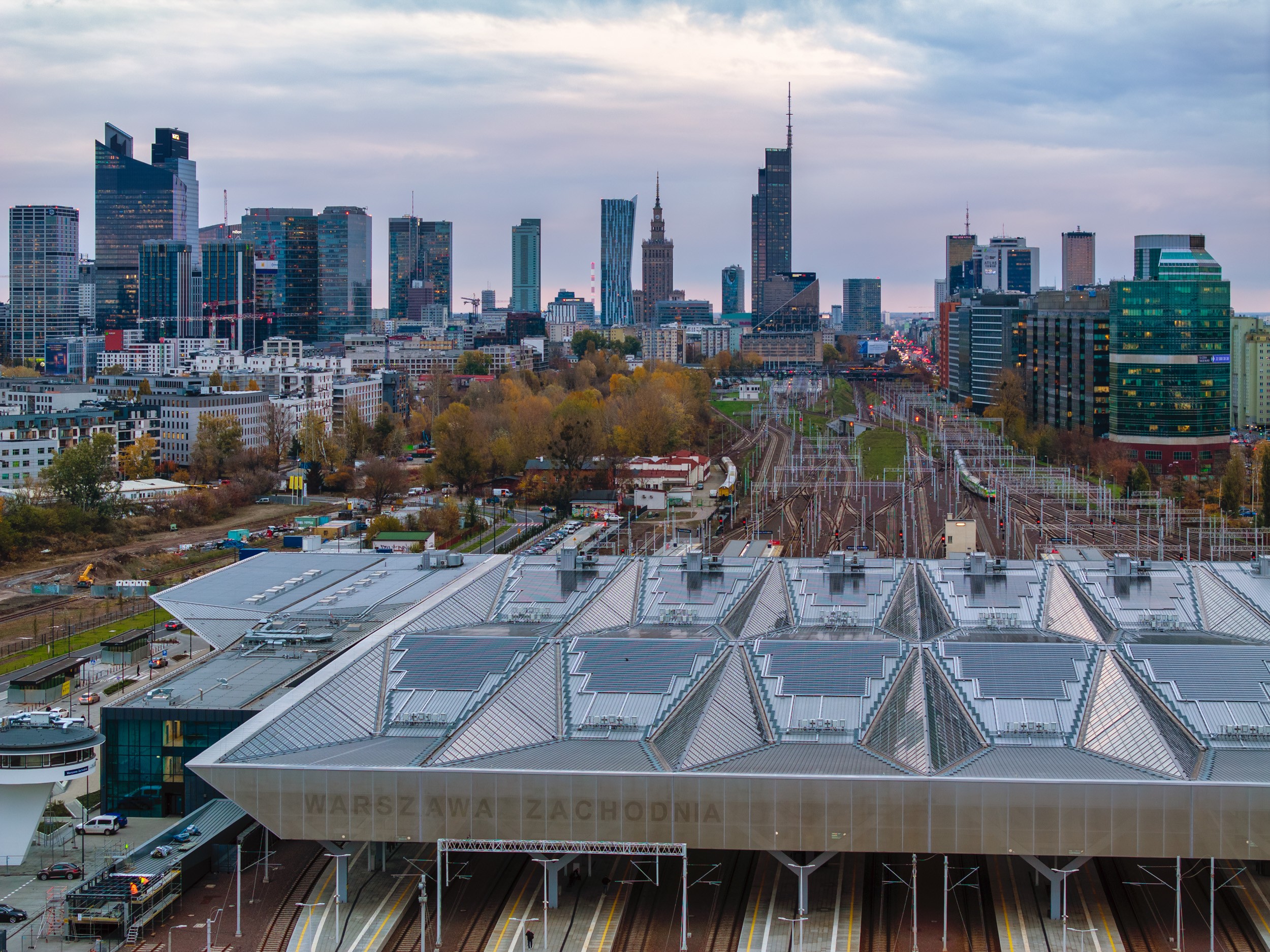
Dworzec Warszawa Zachodnia
Another important layer is Warsaw’s capital-city status, which introduces a multi-level political dynamic. Divergences between national policy priorities and municipal agendas may influence planning debates, major investments, and the broader regulatory environment.
From a procedural perspective, elements of fragmentation persist even within the post-2002 single city framework. Certain planning instruments remain operationally decentralized. A notable example is the issuance of development conditions (warunki zabudowy) at both the central and the district level. Although districts operate within the administrative hierarchy of the city and under the supervision of the Mayor, this division of competences may result in decisions that do not fully align with the strategic direction of spatial policy.
These challenges are further reinforced by the legal framework established by the Act on Spatial Planning and Development of 2003, under which development decisions are not required to be consistent with the city’s main strategic spatial document, the Studium. In practice, this has significantly weakened the effectiveness of strategic planning and contributed to processes such as urban sprawl and spatial incoherence.
An important step toward strengthening strategic coordination was the adoption of Warsaw’s first comprehensive Studium in 2006, which established a citywide spatial framework for the post transformation period. At the same time, planning at the scale of the entire city has a longer tradition. Earlier attempts included the General Spatial Development Plan of 1992, reflecting the transition toward a more liberal planning model after the period of centrally planned economy. While this plan enabled rapid quantitative growth, it lacked sufficient regulatory mechanisms to ensure the quality and coherence of urban development. In this sense, the 2006 Studium can be seen as an effort to reintroduce strategic guidance and spatial order into a rapidly transforming city.
Since then, Warsaw has progressively strengthened this strategic layer, while also complementing statutory planning instruments with more flexible and adaptive approaches. A distinctive feature of the Warsaw model is that the head of the municipal planning and architecture office is responsible not only for strategic documents (formerly the Studium, and now the general plan) and local plans, but also for selected formal procedures and large-scale investment processes.
Such an institutional configuration is demanding: planners operate between the literal interpretation of regulations and the vision of the future city. At the same time, it enhances the capacity to translate policy objectives into implementation.
In response to these conditions, Warsaw has increasingly relied on hybrid instruments. These include participatory scenario-based processes—such as the “Osiedla Warszawy” workshops, which informed masterplans for transformation areas—as well as structured negotiation approaches with developers under special procedures (notably Lex Deweloper), supported by local standards and internal guidelines aimed at safeguarding public interest outcomes.
In parallel, the city has expanded the analytical and participatory foundations of strategic planning, particularly during the preparation of the new Studium initiated in 2018. This process involved the structured integration of socio-economic and spatial analyses with resident input, including district-level meetings, thematic working groups, and map based participatory tools. From the perspective of planning practice, addressing these governance complexities requires strengthening citywide strategic frameworks today through the general plan and the spatial component of the Warsaw 2040+ Strategy—while simultaneously developing evidence-based and participatory processes that help align district level decisions and investment dynamics with a coherent long-term spatial structure.
Could you perhaps give examples of both destructive and positive outcomes of divergence in urban vision between a ruling party/coalition and municipal authorities? I suspect such a configuration could be resulting both in destructive impasse and in “checks and balances” situations? For example, I would think about the “Clean Transport Zone” step-by-step solution as a rather positive example, compared to similar measures elsewhere.
In the case of the Clean Transport Zone, the tension was less about direct conflict between national and municipal authorities and more about balancing policy ambition with social acceptance and political feasibility at the local level. The original proposal presented to the City Council envisioned a zone covering a much larger part of the city. However, strong opposition from parts of the car- dependent population, combined with the broader political debate surrounding the policy, led to a compromise solution: the adopted zone was limited primarily to the central districts and introduced gradually. In this sense, the final outcome can be understood as the result of a negotiated balance between environmental objectives, social expectations, and political constraints.
A more structural set of challenges emerges in relation to infrastructure projects led by national operators, such as railway investments or major road systems. These projects require coordination between state level institutions and municipal authorities, yet they often operate under different planning logics and financial frameworks. As a result, elements of national infrastructure do not always integrate smoothly with the urban fabric, leaving gaps in connectivity that the city is subsequently expected to address without corresponding resources.
This becomes particularly visible in the case of the planned reconstruction of the cross-city railway line (linia średnicowa), a key piece of national rail infrastructure running through the centre of Warsaw. The project requires close coordination between national railway authorities responsible for rail infrastructure and municipal authorities responsible for urban space, transport integration, and public realm improvements. Divergences in institutional priorities and investment timelines can make it difficult to align these objectives in a coherent way.
Another type of negative outcome relates to institutional uncertainty and delays in strategic initiatives, particularly when legislative reforms are introduced at the national level without full alignment with ongoing local planning processes. A clear example is the recent reform of the Polish planning system, which interrupted the preparation of the new Studium in Warsaw and replaced it with the requirement to prepare a general plan (plan ogólny). From the perspective of municipal planning teams, such changes can disrupt long-term processes that have already involved extensive analytical work and public participation.
At the same time, such tensions can also function as a form of checks and balances. Diverging visions between different levels of governance may slow down decision- making, but they can also broaden the scope of public debate and lead to more carefully negotiated and socially robust solutions. In this sense, planning in a capital city rarely follows a purely technocratic logic; rather, it becomes a process of continuous negotiation between multiple institutional actors, interests, and scales of governance.
In the early 2010s, urban issues in Warsaw became highly politicized. We saw the rise of urban movements, active neighbourhood communities, and many NGOs. Has this been helpful for Warsaw municipal planning? If so, in what ways? And looking back today, how would you assess the overall impact of this politicization on the city?
Urban planning is inherently political because it concerns the allocation of spatial resources, public space, environmental quality, accessibility, and the distribution of costs and benefits of development. In Warsaw, the politicization of urban issues since the early 2010s together with the rise of urban movements, neighbourhood communities, and NGOs has, in my view, had an overall constructive effect on municipal planning, although it has also changed the “rules of the game” for how planning legitimacy is built.
Over roughly the last fifteen years, civic actors have become more visible and influential in shaping the urban agenda. A telling example is the professional trajectory of Marlena Happach, who was engaged in civic/NGO initiatives prior to becoming Warsaw’s City Architect. During her tenure, particular emphasis was placed on strengthening participatory practices and improving the accessibility of planning debates through public communication and engagement formats.
At the same time, politicization did not operate only at the level of protest or advocacy; it also encouraged institutional learning. In the preparation of the new Studium (initiated in 2018), we intentionally expanded participation beyond statutory minimums and combined it with a structured analytical methodology. We set out to build a fuller picture of the city by integrating expert analysis with residents’ inputs and by testing spatial development variants precisely because politicization increases the demand for transparency, evidence, and explainable trade-offs. Concretely, we introduced new participation tools, including a geo-questionnaire (geoankieta) enabling map-based responses (places of living, activity patterns, valued locations, areas to protect or develop, problematic transfers), as well as a distance perception study that captured how subjective distance varies with location and mobility options. We also held meetings in all 18 districts during the collection of residents’ submissions, convened thematic working groups with external experts, and published a series of analytical materials (“Reports from Planning the Study”) to make the evidence base intelligible to the wider public. Exhibitions and public events helped translate complex planning dilemmas such as sprawl and limits to growth into a broader civic conversation.
The effect, in my assessment, has been twofold. On the positive side, politicization has increased social sensitivity in planning and improved accountability: residents and NGOs regularly bring local knowledge, identify blind spots, and compel institutions to clarify priorities and justify spatial trade-offs. On the more ambivalent side, politicization can also increase procedural complexity and time costs, and it can push administrations into a more reactive mode, particularly if political attention concentrates on the most visible or most vocal claims rather than on representative public interest or long-term strategy.
Overall, however, Warsaw has benefited from the maturation of civic engagement. It has contributed to a planning culture in which strategic documents are expected to be not only legally correct, but also publicly legible, evidence-based, and responsive to quality-of-life concerns.
Do you see new types of jobs and of professional ethoses emerging from this politicization in the Warsaw context? Or is this politicization more about civitas than about the labour market?
Yes, I would say that the politicization of urban issues has influenced not only civic engagement but also the professional culture of planning and urban governance.
Traditionally, planning offices were perceived primarily as technical or administrative institutions. However, the growing importance of public debate around spatial development has gradually expanded the professional profile of planners and urban policy specialists. Today, planning teams increasingly include experts working at the intersection of spatial analysis, communication, public participation, and interdisciplinary research.
The preparation of the new Studium for Warsaw illustrates this shift quite clearly. The process combined traditional spatial analysis with tools drawn from social sciences, behavioural research, and participatory methodologies. For example, the use of the geo-questionnaire (geoankieta) and the study of distance perception required new types of analytical competences and closer collaboration between planners, data analysts, and participation specialists.
At the same time, new roles have emerged around public communication and mediation. Planning offices increasingly need professionals who are able not only to prepare spatial policies but also to explain them, visualize them, and discuss them with residents, NGOs, and political actors. In this sense, politicization has contributed to a shift in professional ethos: planners are no longer only technical experts but also facilitators of dialogue and translators between expert knowledge and public expectations.
So I would say that politicization in Warsaw has influenced both civic culture (civitas) and the professional ecosystem of urban governance, encouraging more interdisciplinary and communicative forms of planning practice.
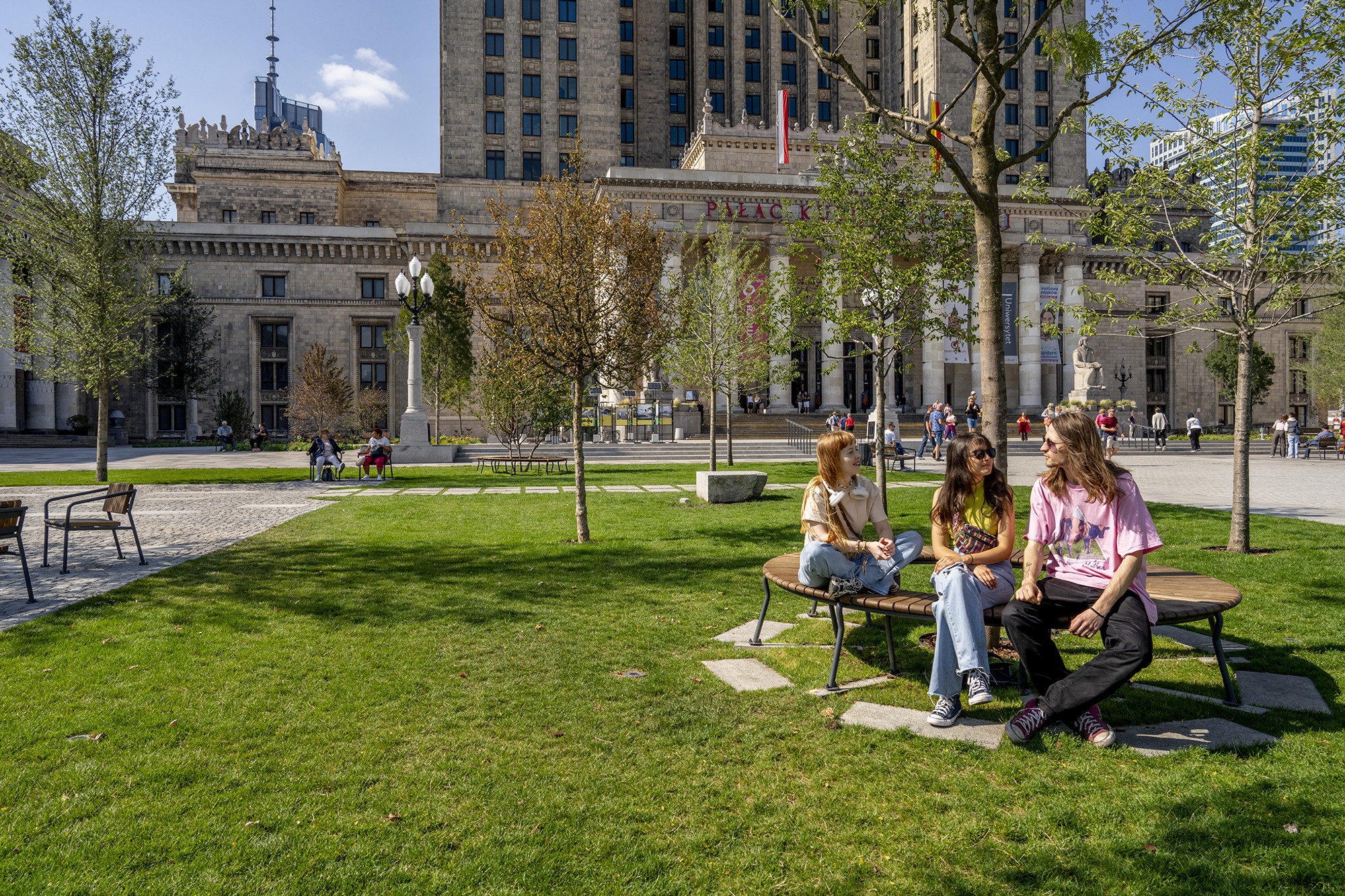
Na Placu Centralnym
Would you say that over the last years, Warsaw’s planning challenges have become truly metropolitan – considering the city’s economic and spatial growth, dependence on suburban commuters, rising migrant populations, and large infrastructure projects? If so, do you think Warsaw needs new governance or planning structures to address these metropolitan challenges?
Over the past decade, Warsaw’s planning challenges have become unmistakably metropolitan. Economic expansion, large infrastructure investments, and the daily dependence on commuters from surrounding municipalities all exceed Warsaw’s administrative boundaries. Migration, both internal and international, has contributed to demographic growth and increased the complexity of housing provision, labour market dynamics, and social integration, reinforcing the need to address urban issues at a functional-region scale.
Although Warsaw is formally a single municipality, the functional urban region extends far beyond it and includes a large number of neighbouring local governments that remain institutionally autonomous. This creates structural coordination challenges, particularly in transport integration, housing pressures and suburban land consumption, environmental protection, and the spatial implications of strategic infrastructure.
At the same time, Warsaw does not have a dedicated metropolitan government with the kind of consolidated legal status that exists in Poland only in one case: the Upper Silesian–Zagłębie Metropolis. For Warsaw, the practical path has therefore been to strengthen metropolitan coordination through strategic and sectoral instruments rather than through a fully new tier of government. In this context, two developments are especially important.
First, Warsaw and surrounding municipalities have pursued a metropolitan development strategy framework intended to improve alignment across jurisdictions. Second and particularly consequential from a planning and funding perspective, the adoption of a Sustainable Urban Mobility Plan (SUMP) for the Warsaw metropolitan area establishes a shared vision for integrated mobility and is increasingly treated as a key enabling condition for investment programming and access to external funding. Metropolitan ticketing and transport integration already provide tangible “everyday governance” benefits, but the metropolitan scale demands more systematic alignment in land-use and infrastructure sequencing as well.
The experience from Warsaw’s strategic planning work also suggests that metropolitan governance cannot rely solely on institutional redesign. It requires shared analytical baselines and common languages of intervention. The integrated analytical and participatory approach used in Warsaw’s strategic spatial work, linking socio-economic geography, spatial economy, accessibility indicators, and resident inputs, illustrates how planning capacity can be built in ways that are portable beyond administrative borders. In my view, Warsaw’s priority should be to deepen metropolitan coordination through shared strategic tools, integrated mobility systems, and interoperable data and scenario frameworks, while continuing the institutional debate on whether a more formal metropolitan structure would add value without undermining local autonomy.
I would say, when talking about the metropolitanization of Warsaw, you prioritize economic and infrastructural dimensions. As a planner, would you recognize the metropolitanization tendency in civic and cultural dimensions too?
Yes, I would definitely recognize metropolitanization in other dimensions. Transformation is also visible in civic life. Many urban debates, whether related to environmental protection, mobility, housing affordability, or the development of public spaces, are no longer confined to Warsaw residents alone. They increasingly involve people who live in surrounding municipalities but work, study, or spend significant time in the city. Platforms such as the ZODIAK Warsaw Pavilion of Architecture, as well as cooperation with institutions such as the National Institute of Architecture and Urban Planning (NIAiU), have helped broaden these discussions and create spaces where professionals, residents, and metropolitan users of the city can engage in debates about urban development.
The metropolitan dimension is also reflected in cultural policy and the transformation of public spaces, particularly in the central areas of the city. Major initiatives implemented within the Nowe Centrum Warszawy (New Centre of Warsaw) programme aim to strengthen Warsaw’s role as a metropolitan cultural hub and to enhance the quality and accessibility of its central public spaces.
One of the most visible elements of this transformation is the development of major cultural institutions in the city centre, including the new Museum of Modern Art in Warsaw, which has become one of the key contemporary cultural venues in Central Europe. The cultural landscape has recently been expanded by the opening of the Warszawski Pawilon Tańca i Innych Sztuk Performatywnych (Warsaw Pavilion for Dance and Performing Arts) located on the Vistula riverfront.
At the same time, metropolitan cultural development is also supported through investments in sports and recreational infrastructure, such as the redevelopment of the historic RKS Skra sports complex, as well as through the ongoing revitalization of Warsaw’s major parks and public spaces. These projects are not designed exclusively for local residents but aim to serve a much wider metropolitan public that uses the city for work, culture, education, and leisure.
In this sense, the transformation of Warsaw’s centre reflects a broader strategy: strengthening the capital’s role as a shared metropolitan cultural space, while simultaneously improving everyday urban quality through accessible public spaces and cultural infrastructure.
Finally, the city has also been exploring new ways of shaping planning culture itself. For example, Warsaw plans to organize international urban competitions in order to promote more integrated and iterative approaches to planning and to create better platforms for dialogue between different stakeholders involved in shaping the city.
In this sense, metropolitanization is not only about infrastructure or governance structures. It also concerns the emergence of a shared metropolitan public sphere, in which debates about the future of the city involve a much broader community of users of Warsaw.
For planners, this means that spatial policy increasingly needs to consider not only residents but also metropolitan users of the city, whose mobility patterns, work locations, and cultural activities shape how Warsaw functions as a metropolitan centre.
As a municipal planner and architect, do you feel there is room in Warsaw’s municipal planning for proactive policy making and long-term planning? Or does the city mostly respond to the effects – both positive and negative – of rapid growth, acting more as a crisis manager than a long-term planner?
Warsaw’s municipal planning operates in a constant tension between proactive long- term policy-making and the need to manage rapid growth under uncertainty. Over the past decades, planning institutions have often had to respond to immediate pressures like investment dynamics, infrastructure deficits, demographic change, and sudden shocks. Recent years have made this especially visible: first through the COVID-19 pandemic, and then through the geopolitical context of war near Poland’s border and the associated population movements, events that underline why spatial policy must be both strategic and resilient.
At the same time, Warsaw has consistently attempted to maintain a proactive strategic layer. The Studium adopted in 2006 served for many years as the city’s core strategic spatial framework. In 2018, after twelve years of policy based on that document and following the adoption of Strategy Warsaw 2030, the City Council initiated the preparation of a new Studium explicitly to respond to emerging social, economic, and spatial challenges. Importantly, we approached this work through an integrated methodology combining evidence, scenario-testing, and participation. We went beyond statutory requirements by adding spatial assumptions and development variants, estimating costs, and grounding strategic choices in accessibility- and quality of-life indicators – such as measures of “convenient locality” and sustainable mobility supported by public input through tools like the geoankieta and district-level engagement.
This experience also highlights a key point about contemporary planning capacity: proactive planning is not only about producing a document, but about building feedback loops between strategy, participation, analysis, and implementation. In Warsaw, we have increasingly tried to translate strategic directions into implementable projects and to use implementation as a way of testing and refining policy assumptions an approach visible, for example, in the development of Nowe Centrum Warszawy, which was informed by the analytical work undertaken for the Studium.
Finally, the current phase is shaped by a major legislative reform in Poland: the city is no longer continuing the Studium procedure as such and is preparing the general plan (plan ogólny) as the new statutory framework. At the same time, the Warsaw 2040+ Strategy for the first time incorporates a spatial dimension, strengthening the link between strategy and spatial policy. New instruments such as Integrated Investment Plans (ZPI) also expand the toolkit for steering development and potentially co-financing infrastructure and public benefits, which can help shift the city from reactive management toward a more negotiated and strategically aligned model of growth.
So, while Warsaw inevitably faces episodes of “crisis management,” I would not describe its planning practice as predominantly reactive. The more accurate description is a planning system that is learning to combine long-term spatial steering with adaptive tools evidence, participation, scenario testing, and negotiated implementation to remain effective in conditions of rapid change.
The case of Warsaw illustrates more broadly the need for new tools and new forms of expertise in managing contemporary urban development processes. What becomes increasingly important is the ability to map and understand the multiple, overlapping processes that shape the city—from investment dynamics and mobility patterns to social and environmental transformations. Only with such an integrated understanding can planning tools be effectively designed to align urban development with contemporary challenges. This also implies that planning can no longer rely solely on traditional regulatory instruments. It requires new analytical capacities, interdisciplinary approaches, and iterative methods of working, combining spatial analysis, social research, and participatory practices. Importantly, new types of expertise are emerging particularly in the pre-design stages of architectural and urban planning processes, where strategic thinking, data analysis, and stakeholder coordination increasingly shape the direction of development before formal design begins.
For this reason, it is equally important to rethink the education of professionals involved in urban development. At the Faculty of Architecture of Brno University of Technology, where I currently teach, these challenges have led to the establishment of a new Master’s programme in Integrative Urban Studies, aimed at equipping future practitioners with the skills needed to operate within increasingly complex and dynamic urban systems.